


15-01-2021, 10:08 AM
Hi Claire,
I have been looking into the details of what you wrote in this passage (p.19):
I have run reduplication counts on the Corpora you published here:
You are not allowed to view links. Register or Login to view.
The numbers I get are reasonably comparable with yours, though not identical:
range: 0.0%-4.4%
average: 0.58%
I have looked into some of the files that result in a reduplication rate higher than 1%. My impression is that they have been extracted from Wikipedia without considering the layout of the pages. For instance, these are two instances of reduplication in this file, with what appears to be the corresponding Wikipedia page:
You are not allowed to view links. Register or Login to view.
"entre los endividus lengoues lengoues"
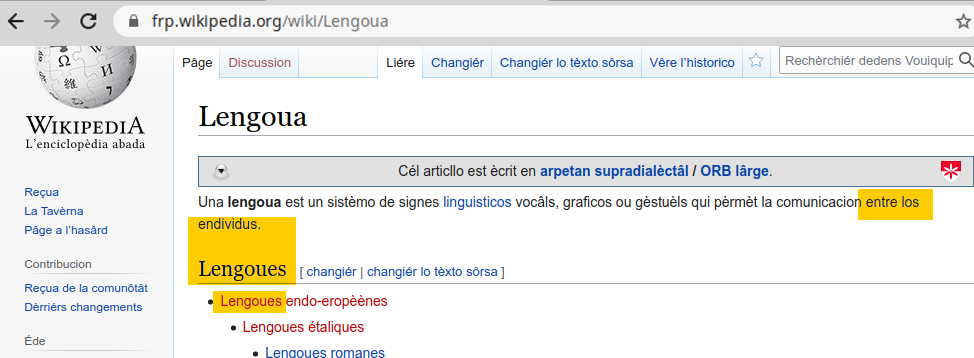
"la rua des âlpes a fribôrg fribôrg"
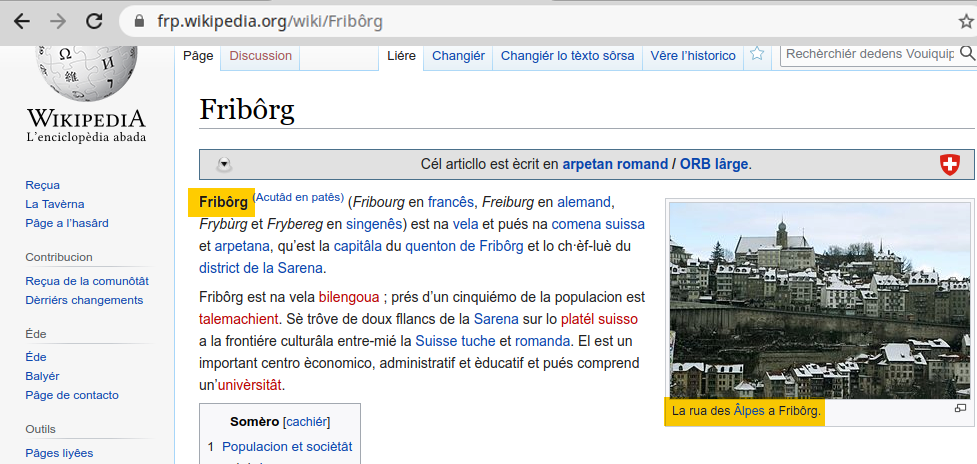
Is this interpretation correct? Have you found any case of reduplication above 0.5% in any long European text that can be interpreted as linguistic, rather than an artifact of how the text was extracted from Wikipedia? If so, could you please share them? I think such cases likely exist and I would be interested in knowing where they originated.
Thank you once again for sharing your results and the corpora you have collected. I am very happy that there are linguists looking into the subject of Voynich reduplication! I am fascinated by it, but I lack the linguistic competence to tackle the problem but from the simple quantitative point of view.
I have been looking into the details of what you wrote in this passage (p.19):
Bowern and Lindemann wrote:Full reduplication, in which the entire word is repeated, is also common in Voynich. However, it is still within the realm of plausibility for natural language texts. In Voynich A each word has a 0.84% chance of repeating while in Voynich B that chance is 0.94%. The range among the samples in our language corpus is 0.02%-4.8%, with an average of 0.63%.
I have run reduplication counts on the Corpora you published here:
You are not allowed to view links. Register or Login to view.
The numbers I get are reasonably comparable with yours, though not identical:
range: 0.0%-4.4%
average: 0.58%
I have looked into some of the files that result in a reduplication rate higher than 1%. My impression is that they have been extracted from Wikipedia without considering the layout of the pages. For instance, these are two instances of reduplication in this file, with what appears to be the corresponding Wikipedia page:
You are not allowed to view links. Register or Login to view.
"entre los endividus lengoues lengoues"
"la rua des âlpes a fribôrg fribôrg"
Is this interpretation correct? Have you found any case of reduplication above 0.5% in any long European text that can be interpreted as linguistic, rather than an artifact of how the text was extracted from Wikipedia? If so, could you please share them? I think such cases likely exist and I would be interested in knowing where they originated.
Thank you once again for sharing your results and the corpora you have collected. I am very happy that there are linguists looking into the subject of Voynich reduplication! I am fascinated by it, but I lack the linguistic competence to tackle the problem but from the simple quantitative point of view.
![[+]](https://www.voynich.ninja/images/collapse_collapsed.png)