Posts: 4,318Threads: 195 Member details
Posts: 4,318
Threads: 195
Thanks Received: 863 in 621 posts
Thanks Given: 908
Joined: Jun 2015
Reputation:
8
Location: Moscow


Country: 
Quote:In addition, bench with an apostrophe (when the bottom of the left leg - is the beginning of apostrophe Figure 16, 17) you can transcribe as "bh".
I'm not sure in that. IMO, this is not b, but just a careless apostrophe.
Posts: 494Threads: 24 Member details
Posts: 494
Threads: 24
Thanks Received: 331 in 198 posts
Thanks Given: 118
Joined: Jan 2016
Reputation:
4
Location: Gelendzhik
Country:
(14-12-2016, 09:09 PM)Anton wrote: You are not allowed to view links. Register or Login to view.Quote:In addition, bench with an apostrophe (when the bottom of the left leg - is the beginning of apostrophe Figure 16, 17) you can transcribe as "bh".
I'm not sure in that. IMO, this is not b, but just a careless apostrophe.
Anton. I did not want to approve it. It is only information for consideration. Because a bench with an apostrophe transcribed by "sh" - conditionally! We just got used to it. But not all the benches and "c" with an apostrophe can confidently as transcribed.
PS / THOMAS. As a by result of the search, another discovery in your piggy bank. On page You are not allowed to view links. Register or Login to view. no one "n" letters.
Posts: 494Threads: 24 Member details
Posts: 494
Threads: 24
Thanks Received: 331 in 198 posts
Thanks Given: 118
Joined: Jan 2016
Reputation:
4
Location: Gelendzhik
Country:
On the page You are not allowed to view links. Register or Login to view. under the blue paint is a hidden inscription. In the middle there is a symbol similar to an inverted "OMEGA", as on page f28v. This is followed by xxx = 30 (xxv=25)?
The second recipe also seems to have an inscription.

Posts: 6,953Threads: 158 Member details
Posts: 6,953
Threads: 158
Thanks Received: 2,004 in 1,498 posts
Thanks Given: 690
Joined: Jan 2016
Reputation:
8
Country: 
10-04-2017, 11:09 AM
(This post was last modified: 10-04-2017, 11:18 AM by -JKP-.)
I think I have a possible explanation for why the "4" in "4o" is sometimes written with a straight line and sometimes with a softer edge (like a "c" shape).
In the late 1300s and early 1400s, the numbers styles were changing.
In the 1300s, they wrote the 7 like a mountain and the 4 like EVA-l. It was rounded. Gradually, during the 15th and early 16th centuries, the 4 evolved into the 4 we know today, with straight angles but I have noticed, in a number of manuscripts created during the transition period, that some of the scribes who were writing the new-style 4 (the straight one), would occasionally revert to the old one. Sometimes they crossed it out and rewrote it, sometimes they straightened it, and sometimes they didn't bother and wrote both styles interchangeably.
So, if it's someone who learned old style (rounded), but adapted to the changing new style (straight), it's quite possible that they would occasionally slip and write it the way they learned it when they were younger.
I'm not saying the "4" is actually a 4, but since the VMS glyph is almost the same shape and written much the same way, the same habits of the hand might apply.
Posts: 4,318Threads: 195 Member details
Posts: 4,318
Threads: 195
Thanks Received: 863 in 621 posts
Thanks Given: 908
Joined: Jun 2015
Reputation:
8
Location: Moscow
Country:
(10-04-2017, 11:09 AM)-JKP- wrote: You are not allowed to view links. Register or Login to view.I think I have a possible explanation for why the "4" in "4o" is sometimes written with a straight line and sometimes with a softer edge (like a "c" shape).
In the late 1300s and early 1400s, the numbers styles were changing.
In the 1300s, they wrote the 7 like a mountain and the 4 like EVA-l. It was rounded. Gradually, during the 15th and early 16th centuries, the 4 evolved into the 4 we know today, with straight angles but I have noticed, in a number of manuscripts created during the transition period, that some of the scribes who were writing the new-style 4 (the straight one), would occasionally revert to the old one. Sometimes they crossed it out and rewrote it, sometimes they straightened it, and sometimes they didn't bother and wrote both styles interchangeably.
So, if it's someone who learned old style (rounded), but adapted to the changing new style (straight), it's quite possible that they would occasionally slip and write it the way they learned it when they were younger.
I'm not saying the "4" is actually a 4, but since the VMS glyph is almost the same shape and written much the same way, the same habits of the hand might apply.
I'm quite sure that it is always meant to be "with a softer edge", no matter what it looks like (in many cases it does look lke that). The reason is that the "c-like" shape (с with prolonged curve) is also encountered in other combinations, not only in combination with a vertical which yields q. More than that, the first occurrence of this "c-prolonged" is not within a q, but within another shape (f1r, line 17).
Posts: 1,238Threads: 18 Member details
Posts: 1,238
Threads: 18
Thanks Received: 378 in 280 posts
Thanks Given: 727
Joined: Jun 2016
Reputation:
2
Country: 
(10-04-2017, 06:35 AM)Wladimir D wrote: You are not allowed to view links. Register or Login to view.On the page You are not allowed to view links. Register or Login to view. under the blue paint is a hidden inscription. In the middle there is a symbol similar to an inverted "OMEGA", as on page f28v. This is followed by xxx = 30 (xxv=25)?
The second recipe also seems to have an inscription. Could it be Ketu, or inverted Rahu symbol such as this one top left:

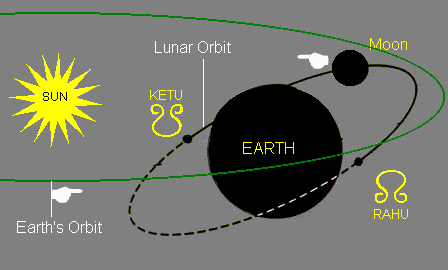

Rahu?
Posts: 494Threads: 24 Member details
Posts: 494
Threads: 24
Thanks Received: 331 in 198 posts
Thanks Given: 118
Joined: Jan 2016
Reputation:
4
Location: Gelendzhik
Country:
Maybe the symbol ∫ (f68r2) is an independent glyph? Then you can explain the non-standard writing of some gallows.

Posts: 4,318Threads: 195 Member details
Posts: 4,318
Threads: 195
Thanks Received: 863 in 621 posts
Thanks Given: 908
Joined: Jun 2015
Reputation:
8
Location: Moscow
Country:
09-06-2017, 04:28 PM
(This post was last modified: 09-06-2017, 04:29 PM by Anton.)

f2r, line 10
the second apostrophe
Posts: 1,159Threads: 118 Member details
Posts: 1,159
Threads: 118
Thanks Received: 719 in 406 posts
Thanks Given: 1082
Joined: Jan 2016
Reputation:
6
(24-05-2017, 12:52 PM)Wladimir D wrote: You are not allowed to view links. Register or Login to view.Maybe the symbol ∫ (f68r2) is an independent glyph? Then you can explain the non-standard writing of some gallows.
This is very interesting indeed Wladimir D!
Especially in light of JKP's recent You are not allowed to view links. Register or Login to view. on the gallows... I would be curious to read JKP's opinion on this.
If there is mounting evidence that suggests gallows could in fact be two separate caracters ligatured together, that would really solidify the need for a new transcription system IMO.
Posts: 4,493Threads: 170 Member details
Posts: 4,493
Threads: 170
Thanks Received: 3,319 in 1,868 posts
Thanks Given: 579
Joined: Jan 2016
Reputation:
10
Country: 
(09-06-2017, 06:02 PM)VViews wrote: You are not allowed to view links. Register or Login to view.If there is mounting evidence that suggests gallows could in fact be two separate caracters ligatured together, that would really solidify the need for a new transcription system IMO.
I would like to point out that this is not so much an issue of transcription, but rather one of interpretation.
As long as the transcription has been done consistently, simple software tools can change single-character representations of the gallows into double-character representations.
The You are not allowed to view links. Register or Login to view. (see especially You are not allowed to view links. Register or Login to view. ) already represented gallows as character pairs.
 The following 1 user says Thank You to ReneZ for this post:1 user says Thank You to ReneZ for this post
• VViews
|