
20-10-2026, 10:39 PM
(This post was last modified: Yesterday, 01:14 AM by Pierre Dumont Himself.)
Looks good. There are four sets of swallowtail merlons in the pictorial cycle:
![[Image: Pietro_Cavallini%2C_S.Giovanni_Evangelis...t=original]](https://upload.wikimedia.org/wikipedia/commons/f/fc/Pietro_Cavallini%2C_S.Giovanni_Evangelista_immerso_nell%27olio_bollente_%281308-1309%29.jpg?utm_source=commons.wikimedia.org&utm_campaign=index&utm_content=original)
S.Giovanni Evangelista immerso nell'olio bollente [John the Apostle immersed in burning oil]
![[Image: Pietro_Cavallini%2C_Noli_me_tangere_%281...t=original]](https://upload.wikimedia.org/wikipedia/commons/f/fc/Pietro_Cavallini%2C_Noli_me_tangere_%281308-09%29_01.jpg?utm_source=commons.wikimedia.org&utm_campaign=imageinfo&utm_content=original)
Noli me tangere [Latin of "Do not touch me" - allegedly said by Jesus to Mary Magdalene after the Resurrection]
![[Image: Pietro_Cavallini%2C_Miracolo_postumo_di_...t=original]](https://upload.wikimedia.org/wikipedia/commons/f/f1/Pietro_Cavallini%2C_Miracolo_postumo_di_Sant%27Andrea_%28a_sinistra%29_e_Crocifissione_di_Sant%27Andrea_e_il_prefetto_Aegeas_strangolato_dal_demonio_%281308-09%29_01.jpg?utm_source=commons.wikimedia.org&utm_campaign=imageinfo&utm_content=original)
Crocifissione di Sant'Andrea e il prefetto Aegeas strangolato dal demonio [Crucifixion of St. Andrew and Prefect Aegeas Strangled by the Devil - as divine punishment]
![[Image: Pietro_Cavallini%2C_Crocifissione_con_du...t=original]](https://upload.wikimedia.org/wikipedia/commons/f/f4/Pietro_Cavallini%2C_Crocifissione_con_due_Santi_domenicani_%281308-09%29_01.jpg?utm_source=commons.wikimedia.org&utm_campaign=imageinfo&utm_content=originalhttps://upload.wikimedia.org/wikipedia/commons/f/f4/Pietro_Cavallini%2C_Crocifissione_con_due_Santi_domenicani_%281308-09%29_01.jpg?utm_source=commons.wikimedia.org&utm_campaign=imageinfo&utm_content=original)
Crocifissione con due Santi domenicani.
Pietro Cavallini [1240 – circa 1330] was a versatile painter trained in the Byzantine school who, later in his life, helped pioneer a new style of naturalism marked by a focus on architectural elements and made famous around the same time by a young Giotto [1267-1337]. Noli me tangere is a much rarer subject in Gothic painting than the martyrdoms or Crucifixion, though it becomes relatively common in the Renaissance. This particular cycle has contemporary parallels in Giotto's own works:
![[Image: 1610391048-mosaico-luce-diffusa.jpg?w=25...2Ccompress]](https://www.datocms-assets.com/35103/1610391048-mosaico-luce-diffusa.jpg?w=2500&fit=max&auto=format%2Ccompress)
![[Image: 1610790661-d000191-edited.png?w=1500&h=9...2Ccompress]](https://www.datocms-assets.com/35103/1610790661-d000191-edited.png?w=1500&h=900&fit=max&auto=format%2Ccompress)
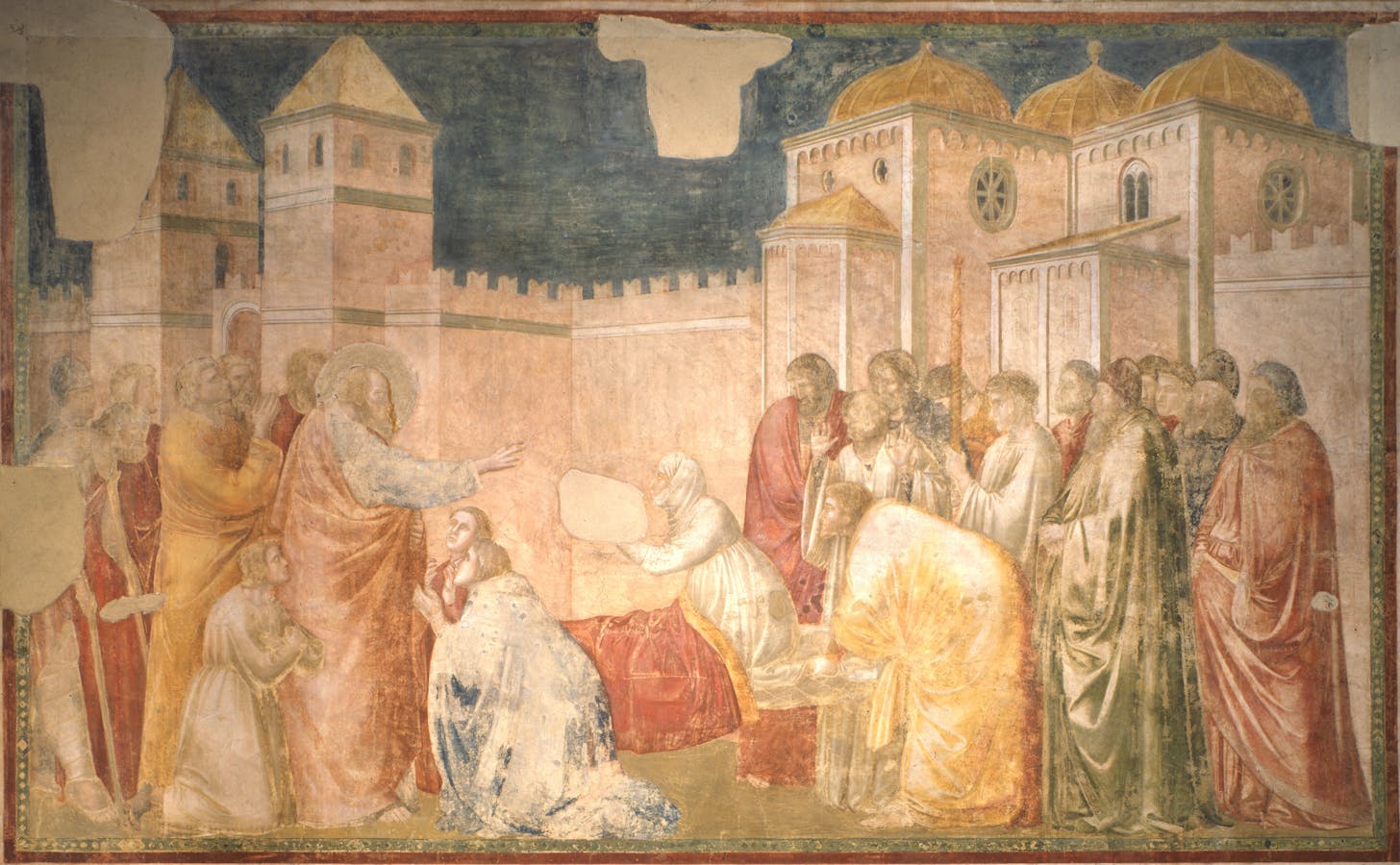
Stories of St. John the Baptist and of St. John the Evangelist, c. 1310-1311 with a detail of the Resurrection of Drusiana (right wall).
You are not allowed to view links. Register or Login to view.
![[Image: Giotto_di_Bondone_-_No._37_Scenes_from_t...t=original]](https://upload.wikimedia.org/wikipedia/commons/4/48/Giotto_di_Bondone_-_No._37_Scenes_from_the_Life_of_Christ_-_21._Resurrection_%28Noli_me_tangere%29_-_WGA09224.jpg?utm_source=it.wikipedia.org&utm_campaign=imageinfo&utm_content=original)
Giotto - Resurrezione e Noli me tangere, 1303-1305 circa, Cappella degli Scrovegni, Padova.
![[Image: Pietro_Cavallini%2C_S.Giovanni_Evangelis...t=original]](https://upload.wikimedia.org/wikipedia/commons/f/fc/Pietro_Cavallini%2C_S.Giovanni_Evangelista_immerso_nell%27olio_bollente_%281308-1309%29.jpg?utm_source=commons.wikimedia.org&utm_campaign=index&utm_content=original)
S.Giovanni Evangelista immerso nell'olio bollente [John the Apostle immersed in burning oil]
![[Image: Pietro_Cavallini%2C_Noli_me_tangere_%281...t=original]](https://upload.wikimedia.org/wikipedia/commons/f/fc/Pietro_Cavallini%2C_Noli_me_tangere_%281308-09%29_01.jpg?utm_source=commons.wikimedia.org&utm_campaign=imageinfo&utm_content=original)
Noli me tangere [Latin of "Do not touch me" - allegedly said by Jesus to Mary Magdalene after the Resurrection]
![[Image: Pietro_Cavallini%2C_Miracolo_postumo_di_...t=original]](https://upload.wikimedia.org/wikipedia/commons/f/f1/Pietro_Cavallini%2C_Miracolo_postumo_di_Sant%27Andrea_%28a_sinistra%29_e_Crocifissione_di_Sant%27Andrea_e_il_prefetto_Aegeas_strangolato_dal_demonio_%281308-09%29_01.jpg?utm_source=commons.wikimedia.org&utm_campaign=imageinfo&utm_content=original)
Crocifissione di Sant'Andrea e il prefetto Aegeas strangolato dal demonio [Crucifixion of St. Andrew and Prefect Aegeas Strangled by the Devil - as divine punishment]
![[Image: Pietro_Cavallini%2C_Crocifissione_con_du...t=original]](https://upload.wikimedia.org/wikipedia/commons/f/f4/Pietro_Cavallini%2C_Crocifissione_con_due_Santi_domenicani_%281308-09%29_01.jpg?utm_source=commons.wikimedia.org&utm_campaign=imageinfo&utm_content=originalhttps://upload.wikimedia.org/wikipedia/commons/f/f4/Pietro_Cavallini%2C_Crocifissione_con_due_Santi_domenicani_%281308-09%29_01.jpg?utm_source=commons.wikimedia.org&utm_campaign=imageinfo&utm_content=original)
Crocifissione con due Santi domenicani.
Pietro Cavallini [1240 – circa 1330] was a versatile painter trained in the Byzantine school who, later in his life, helped pioneer a new style of naturalism marked by a focus on architectural elements and made famous around the same time by a young Giotto [1267-1337]. Noli me tangere is a much rarer subject in Gothic painting than the martyrdoms or Crucifixion, though it becomes relatively common in the Renaissance. This particular cycle has contemporary parallels in Giotto's own works:
![[Image: 1610391048-mosaico-luce-diffusa.jpg?w=25...2Ccompress]](https://www.datocms-assets.com/35103/1610391048-mosaico-luce-diffusa.jpg?w=2500&fit=max&auto=format%2Ccompress)
![[Image: 1610790661-d000191-edited.png?w=1500&h=9...2Ccompress]](https://www.datocms-assets.com/35103/1610790661-d000191-edited.png?w=1500&h=900&fit=max&auto=format%2Ccompress)
Stories of St. John the Baptist and of St. John the Evangelist, c. 1310-1311 with a detail of the Resurrection of Drusiana (right wall).
You are not allowed to view links. Register or Login to view.
![[Image: Giotto_di_Bondone_-_No._37_Scenes_from_t...t=original]](https://upload.wikimedia.org/wikipedia/commons/4/48/Giotto_di_Bondone_-_No._37_Scenes_from_the_Life_of_Christ_-_21._Resurrection_%28Noli_me_tangere%29_-_WGA09224.jpg?utm_source=it.wikipedia.org&utm_campaign=imageinfo&utm_content=original)
Giotto - Resurrezione e Noli me tangere, 1303-1305 circa, Cappella degli Scrovegni, Padova.


![[+]](https://www.voynich.ninja/images/collapse_collapsed.png)