




15-12-2020, 09:17 AM
If you say, for the sake of discussion that y is e + tail or e + tail, then every VMS token in this clip has a terminal tail (except the round shapes o or d, which would normally not have one in any western language):
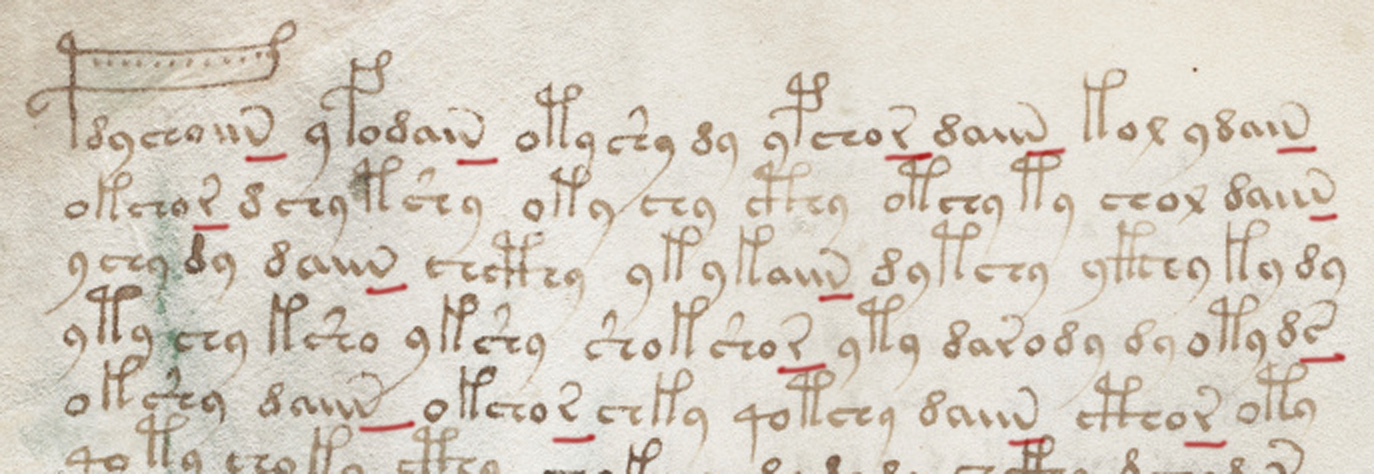
Thus, the y n r s and m comprise the overwhelming majority of terminal glyphs (g shows up occasionally but not frequently). Only five characters. In linguistic texts, most letters (c. 18 to 22 characters) can occur at the end. The tail analogy applies to specific shapes, but not their frequency.
Compare this to the Latin example (which is similar in balance and form to other languages that use Latin characters). Even though terminal tails are relatively common, it averages only about 1 or 2 per line (some manuscripts might have 3 or 4 but it's rare for there to be more than this).

Western languages generally only have about 10–20% of words ending in tails (this is if you combine terminal tails together with abbrev. symbols that are tails—if you count only terminal tails, the percentage is even less).
Stretched letters and tails do occur in Hebrew and Arabic scripts, but the choice of what gets a tail appears to follow Latin-alphabet conventions in the VMS.
Thus, the y n r s and m comprise the overwhelming majority of terminal glyphs (g shows up occasionally but not frequently). Only five characters. In linguistic texts, most letters (c. 18 to 22 characters) can occur at the end. The tail analogy applies to specific shapes, but not their frequency.
Compare this to the Latin example (which is similar in balance and form to other languages that use Latin characters). Even though terminal tails are relatively common, it averages only about 1 or 2 per line (some manuscripts might have 3 or 4 but it's rare for there to be more than this).
Western languages generally only have about 10–20% of words ending in tails (this is if you combine terminal tails together with abbrev. symbols that are tails—if you count only terminal tails, the percentage is even less).
Stretched letters and tails do occur in Hebrew and Arabic scripts, but the choice of what gets a tail appears to follow Latin-alphabet conventions in the VMS.