


The reference is to Nick Pelling's post, and this image:
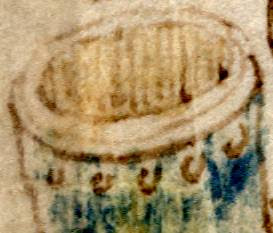

Which she interprets as showing Sankai (or Sancai) glazed ceramic (on the right).
Personally all I see here is more sloppy paint application (possibly also poor paint preparation) by the person who added the blues and greens, as is consistently displayed throughout the Voynich manuscript, not just in the containers.
As for the scratches shown by Searcher in the other thread, I don't see what they might have to do with sgraffito. The majority of the scratches we see in the manuscript are not on painted parts, except for the 94r one.
In any case:
There is zero indication about WHO made the scratches or WHEN these scratches could have been made. They could have been added decades or even centuries later.
If the idea is to stick to facts and evidence, undated scratches cannot be taken as evidence of provenance or to make inferences about the people who created this manuscript.